Have you ever stared at your trading platform, wondering, “How many contracts should I actually trade?” You’re not alone. Whether you’re trading the NQ, ES, or YM, guessing your position size is like driving blindfolded, you might get lucky, but the crash is inevitable.
The difference between a trader who survives the market’s volatility and one who gets wiped out often boils down to one critical skill: futures position sizing. Getting this right is your first line of defense, turning reckless gambling into calculated risk-taking.
This guide will demystify the futures position sizing formula, walk you through real-world examples, and show you how to use a free tool that does the heavy lifting for you in seconds. Let’s turn uncertainty into confidence.
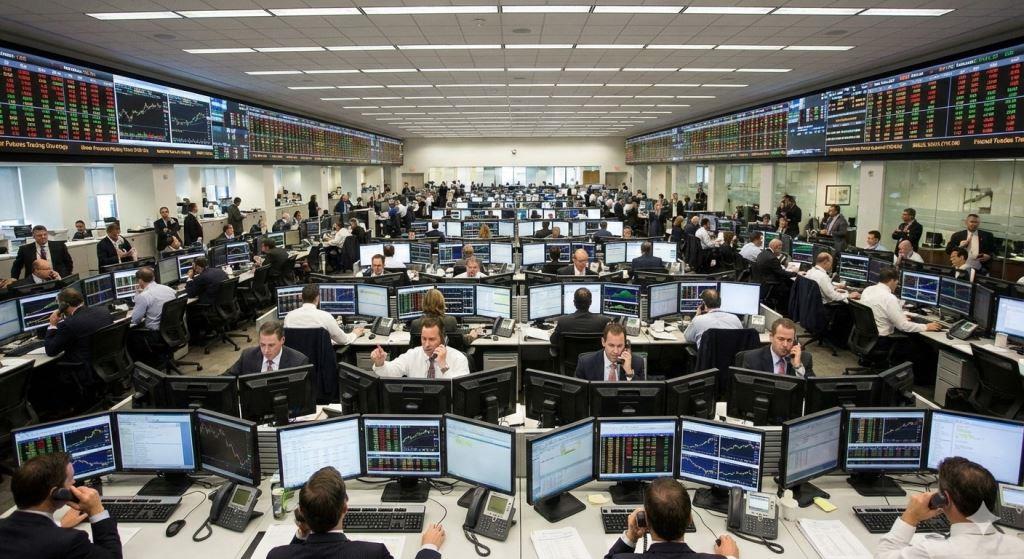
Futures Position Sizing Formula – The Trader’s Secret to Smart Risk Management
Why Futures Position Sizing is Your Most Important Trade Setup
Before you even think about entry points or profit targets, you need to know your position size. This isn’t a fancy advanced technique; it’s Trading 101. Position sizing is the process of determining the exact number of futures contracts to trade based on your account size and how much you’re willing to risk.
The High Cost of Getting It Wrong
Trading futures without proper sizing is a fast track to two common disasters:
-
Overleveraging: Taking on too many contracts can amplify a small loss into a catastrophic drawdown, potentially blowing up your account.
-
Under-trading: Being too cautious means you’re not using your capital efficiently, leaving significant profit on the table during winning trades.
The goal is simple: to risk a small, predefined portion of your capital on any single trade. This discipline ensures that no string of losses can knock you out of the game, preserving your ability to trade another day.
The Core Futures Position Sizing Formula Explained
Don’t let the word “formula” scare you. The core calculation is straightforward. It answers one question: “Given my account size, my risk tolerance, and my planned stop-loss, how many contracts can I trade?”
Here is the essential futures position sizing formula:
Number of Contracts = (Account Risk) / (Risk per Contract)
Let’s break down what each of these components means:
-
Account Risk: This is the maximum dollar amount you are willing to lose on the trade. You calculate it as:
Account Risk = Account Size × Risk Percentage
Most professional traders risk between 0.5% and 2% of their account on any single trade. -
Risk per Contract: This is how much money you would lose on one contract if your stop-loss is hit. It depends on two things:
-
Stop-Loss Distance (in points): The difference between your entry price and stop-loss price.
-
Point Value: The dollar value of a one-point move in the specific futures contract you’re trading (e.g., $50 for ES, $20 for NQ, $2 for MNQ).
Risk per Contract = Stop-Loss (points) × Point Value
-
A Step-by-Step Calculation Example
Let’s make this concrete. Imagine you have:
-
Account Size: $50,000
-
Risk Percentage: 1% per trade
-
Trade: Micro E-mini Nasdaq (MNQ)
-
MNQ Point Value: $2 per point
-
Planned Stop-Loss: 10 points away from entry
Step 1: Calculate Account Risk
$50,000 × 1% = $500
You are willing to risk $500 on this trade.
Step 2: Calculate Risk per Contract
10 points × $2 per point = $20
If the MNQ moves 10 points against you, one contract loses $20.
Step 3: Apply the Formula
Number of Contracts = $500 / $20 = 25 contracts
This calculation tells you that to stay within your 1% risk rule with a 10-point stop, you can trade 25 MNQ contracts.
3 Common Position Sizing Mistakes (And How to Fix Them)
Knowing the formula is half the battle. Avoiding these 3 common position sizing mistakes is the other half.
-
Ignoring Contract Volatility: A 10-point stop in the relatively stable YM is different from a 10-point stop in the volatile NQ. Always consider the Average True Range (ATR) when setting your stop. A stop that’s too tight for a volatile contract will get hit constantly by market noise.
-
Misjudging Point Values: This is a critical error. Trading the E-mini S&P 500 (ES) thinking it has a $5 point value (like the MES) would lead to a position size ten times too large! Always double-check the contract specifications.
-
Overlooking Margin Requirements: The formula tells you what’s prudent, but your broker tells you what’s possible. Always ensure you have sufficient margin for your calculated position size, and remember that overnight margins are often higher than day-trade margins.
From Formula to Practice: Using the Futures Contract Calculator
While the manual calculation is valuable for understanding, you don’t need to do it by hand for every trade. This is where the Futures Position Calculator at futuresposition.com becomes your indispensable partner.
This free tool automates the entire process, ensuring speed and accuracy. Here’s how to use it in three simple steps:
-
Enter Your Details: Input your account size, your risk percentage (e.g., 1%), your stop-loss in points, and select your futures contract (e.g., MNQ, ES, CL).
-
Get Instant Calculations: The calculator instantly computes:
-
The optimal number of contracts to trade.
-
Your total risk in dollars.
-
Estimated margin required.
-
Potential profit targets at 1:1, 1:2, and 1:3 risk-reward ratios.
-
-
Trade with a Plan: With this precise information, you can place your trade knowing exactly what’s at stake and what you’re aiming for. It turns a hopeful guess into a strategic decision.
Try the calculator now: Instead of doing the math yourself, use the free Futures Position Calculator to get your numbers in seconds.
Leveling Up: Advanced Position Sizing Concepts
Once you’ve mastered the basic formula, you can explore more sophisticated methods to refine your approach.
-
Dynamic Sizing with ATR: Instead of a fixed stop-loss in points, set your stop based on a multiple of the 14-period Average True Range (ATR). This automatically widens or tightens your stop (and thus adjusts your position size) based on current market volatility.
-
The Kelly Criterion: A more mathematical approach that aims to maximize long-term growth by factoring in your win rate and risk/reward ratio. It’s powerful but can be aggressive; many traders use a “Fractional Kelly” (e.g., half of the suggested size) for a smoother equity curve.
For a deep dive into these advanced strategies, resources like the quantitative finance blog QuantInsti offer excellent, detailed explorations.
Frequently Asked Questions
What’s a safe risk percentage for futures trading?
Most seasoned traders risk between 0.5% to 2% of their account per trade. If you’re a beginner, start at the lower end of this range (0.5%-1%) to preserve capital while you learn. Risking more than 2% significantly increases your risk of severe drawdowns.
What’s the difference between E-mini and Micro futures?
E-mini contracts are the standard size, while Micro contracts are 1/10th the size. For example, the NQ E-mini has a $20 point value, while the NQ Micro (MNQ) has a $2 point value. Micros are ideal for smaller accounts, beginners, or traders wanting more precise position sizing.
Can I use the same formula for day trading and swing trading?
Absolutely. The formula is strategy-agnostic. A day trader might use a tighter stop-loss (5-15 points), resulting in a larger contract size for the same dollar risk. A swing trader using a wider stop (20-50+ points) would trade fewer contracts. The key is to adjust your inputs based on your timeframe and strategy.
Your Next Step: Trade with Precision, Not Guesswork
Understanding the futures position sizing formula is the foundation of professional trading. It transforms risk management from a vague concept into a precise, repeatable process. You now know how to calculate your perfect trade size manually and why each variable matters.
But knowledge without action has no value. The fastest way to apply this lesson is to stop calculating and start using a tool built for the job.
Ready to end the guesswork?
Visit the Futures Position Calculator, input your trade details, and in less than a minute, you’ll have your optimal contract size, total risk, and clear profit targets. It’s the simplest way to ensure every trade you place is sized for survival and success.
Disclaimer: This article is for educational purposes only and does not constitute financial advice. Futures trading involves substantial risk and is not suitable for all investors. Past performance is not indicative of future results.